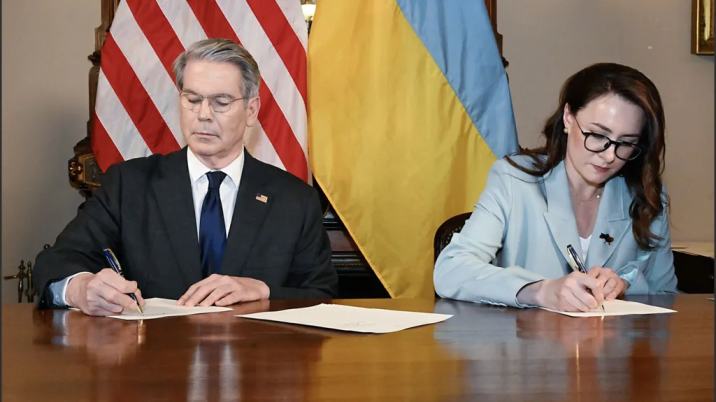
Ukraine and the International Monetary Fund have agreed to relax certain conditions on a new $8.2 billion (Sh1 trillion) loan programme, easing tax measures that were previously a major point of contention, Prime Minister Yulia Svyrydenko announced on Saturday.
The revised terms are seen as a necessary step to unlock additional international funding, including a €90 billion ($106.8 billion) European Union loan.
Svyrydenko said the IMF board is expected to review the programme at its next session, underlining that approval is essential for the flow of broader external support.
With the war against Russia entering its fifth year, Ukraine continues to rely heavily on Western financial assistance to maintain military operations, public services, and salaries.
“The mission has simplified the agreements reached in November” and modified some structural benchmarks, Svyrydenko said in an official statement. The original staff-level agreement, concluded in November, included a key condition requiring tax hikes for individual entrepreneurs as part of the four-year programme.
The country’s economy has faced mounting pressure in recent months due to intensified Russian airstrikes that damaged energy infrastructure, leaving millions without electricity, heating, and water in freezing winter conditions.
While costly energy imports and generator-supplied power have allowed businesses to operate, many have had to cut hours and reduce output, leading the central bank to lower its 2026 GDP growth forecast from 2% to 1.8%.
Svyrydenko identified taxing individual entrepreneurs as the most sensitive element of the IMF programme. The government agreed to impose a value-added tax on them, raising the revenue threshold to 4 million hryvnias (€85,000) from 1 million hryvnias.
Analysts now estimate that roughly 250,000 entrepreneurs will be affected, compared with more than 600,000 under the initial plan.
“The government is discussing the changes with lawmakers as it prepares draft legislation with other tax increases,” Svyrydenko added, highlighting ongoing efforts to coordinate the implementation of the revised programme.































Comments
Sign in with Google to comment, reply, and like comments.
Continue with Google